


Have you ever walked out of a lab following an examination and wondered, “Can I still hit the gym today?” You’re not the only one. No matter if you’re a gym enthusiast or simply trying to keep a consistent routine and stay fit, skipping a workout could seem like you’ve missed a step in your climb to success.
However, the question is: does an easy blood draw actually influence your workout performance? Or is it simply within your brain?
Let’s dissect it.
Understanding What Happens During a Blood Draw
Before deciding whether you should exercise, it is important to be aware of what happens when blood samples are drawn.
How Much Blood Is Actually Taken?
For normal blood tests approximately 5-30 milliliters of blood are taken. This is roughly one to six teaspoons. Sounds tiny, right? If you consider that your body has 4.5 to 5.5 milliliters of blood. That number is quite tiny.
It’s similar to removing one cup of water out of a pool.
But simply because the volume of water isn’t huge doesn’t mean that your body won’t be able to notice.
What Happens to Your Body After Blood Is Drawn?
The body instantly begins to compensate. The plasma volume will be restored within a matter of hours if you’re well-hydrated. Red blood cells can take longer, sometimes just a few days.
You might feel:
- Slightly weak
- Dizziness
- A bit of soreness in the arm
The majority of people feel normal in a matter of hours. However, some people do not.
Is It Safe to Workout After Getting Blood Drawn?
The Short Answer
Yes, most of the time you can exercise following a blood draw–but do so with care.
The Long Answer
It is based on:
- What amount of blood was drawn?
- No matter if you have fasted
- The way your body reacts
- The intensity of your scheduled exercise
If it’s a basic testing of blood, and you are good, light exercise is generally fine. But jumping into deadlifts that are heavy or intense cardio right away? This is a different matter.
Risks of Exercising Too Soon
Let’s talk about what could happen in the event that you hurry to get back in training.
Dizziness and Lightheadedness
The most frequent problem. Particularly if you had fasted prior to the test.
The blood sugar levels of your child could be low. If you combine that with loss of fluid and intense workouts? It could feel as if that the entire room spins.
Bruising and Bleeding
Your vein requires time to seal correctly. A lot of lifting can raise blood pressure. This can result in:
- A little more bleeding
- Bleeding around the puncture site
Have you ever witnessed a tiny bump change into a large purple patch? That’s why.
Fatigue and Weakness
Your body has lost a few Red blood cells. They transport oxygen. The less oxygen delivered means slightly less endurance.
It’s not dramatic, but it’s evident when you’re working to the max.
How Long Should You Wait Before Working Out?
This is contingent on the intensity of workout.
Light Exercise Timeline
Yoga, stretching, walking or other mobility-related exercises?
The usual time for these is 2 to 4 hours following the blood draw if you feel well.
Intense Exercise Timeline
For workouts that are more intense It’s best to put off the workout for at minimum 24 hours.
Strength Training
Avoid lifting heavy weights during the same day, especially exercises that involve the arm used to draw blood.
The bench press, the pull-ups and shoulder press? You could skip those for the day.
Cardio Workouts
High-intensity aerobics (HIIT or sprints) may cause dizziness. Light jogging is acceptable when you feel safe.
Factors That Affect Recovery Time
Everybody’s body reacts differently.
Your Hydration Level
If you’re dehydrated prior taking the test, then you’ll feel more ill following the test. Drink plenty of water prior to and after the test.
Hydration is the secret tool here.
Your Overall Health
If you’re already low in iron levels, even a tiny blood sample could cause you to feel exhausted.
Type of Blood Test
Lab test routine? Very little impact.
Large volume draw? Need more recovery.
Whether You Fasted Before the Test
Fasting can lower blood sugar levels. If you combine it with exercise, you may feel faint.
Eat before exercising. Always.
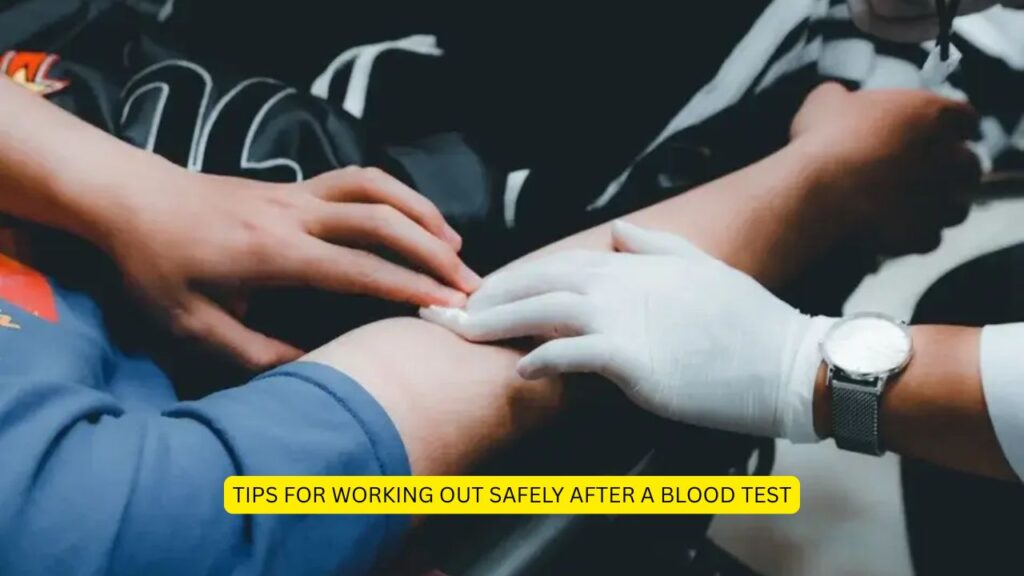
Tips for Working Out Safely After a Blood Test
Are you looking to be smarter? Take these steps.
Stay Hydrated
Drink plenty of water prior to and following the test. Consider it as filling your tank inside you.
Eat a Balanced Meal
Protein + carbs. Simple combination.
This improves blood sugar levels and helps in recovering.
Avoid Using the Same Arm
If you have blood taken through your arm’s right side, do not overdo it with pressing or curls in the moment.
Let it heal.
Listen to Your Body
Do you feel irritable? Stop.
There’s nothing to be proud of for getting through dizziness.
What If You Feel Weak After the Blood Draw?
Sometimes, your body is telling you “Not today.”
Signs You Should Stop Exercising
- Dizziness
- Nausea
- Vision blurred
- Extreme sweating
- The swelling or pain in the arm
These are warning signals. Pause immediately.
When to See a Doctor
If you are experiencing:
- Persistent bleeding
- Severe swelling
- Fainting
- The signs of infection
Seek medical attention.
Can You Go to the Gym the Same Day?
Yes, but be sure to change your expectations.
Consider it an “deload day.”
Lower weights. A smaller number of sets. Shorter duration.
Intensity is more important than consistency.
If you feel stable and strong take a step forward, but do it in a responsible manner.
Special Considerations for Athletes
Athletes who compete should schedule blood tests on the recovery period.
Why?
Since even a slight dip in performance could affect the training cycle.
If you’ve got an important event planned, you should do not draw blood within 48 hours of the event.
The preparation is the most important thing.
Read also:-
- Can You Workout After Laser Hair Removal? A Complete Guide
- Is Skateboarding a Good Workout? A Simple and Honest Guide
Conclusion:-
Do you think that you can exercise after having blood drawn?
Yes–but it depends.
If it was an ordinary test that you felt well, a light workout is usually considered safe. But do you want to perform heavy lifting and vigorous cardio? Better to put off for at least 24 hours.
Consider your body as a battery in a smartphone. A slight drain will not stop it from working, but pushing it with force immediately after may.
Drink plenty of water. Eat regularly. Pay attention to your body.
Remember that one tweaked workout won’t make a difference to your improvement. The danger is that you ignore warning signs.
FAQs:-
1. Do I have the ability to lift weights following the routine blood test?
It’s best to avoid excessive lifting of the upper body for at minimum 24 hours, particularly on the arm that is used for drawing.
2. Can you run after having blood drawn?
Light jogging is typically okay if you’re feeling steady. Do not run at high intensity on that next day.
3. Do I feel dizzy following the blood test?
It could be caused by drinking water, fasting or a brief reduction of blood pressure.
4. Do I have to exercise after the draw of my blood affect my results from tests?
No. The blood sample has already been taken. The exercise won’t alter the results of this specific test.
5. How long will you need to recover fully from the blood draw?
The volume of plasma usually increases within a matter of hours if you drink enough water. Red blood cells could require several days to fully recover.

dilaawarrajput@gmail.com
Fitness writer sharing practical, evidence-aware guidance for stronger everyday living.