

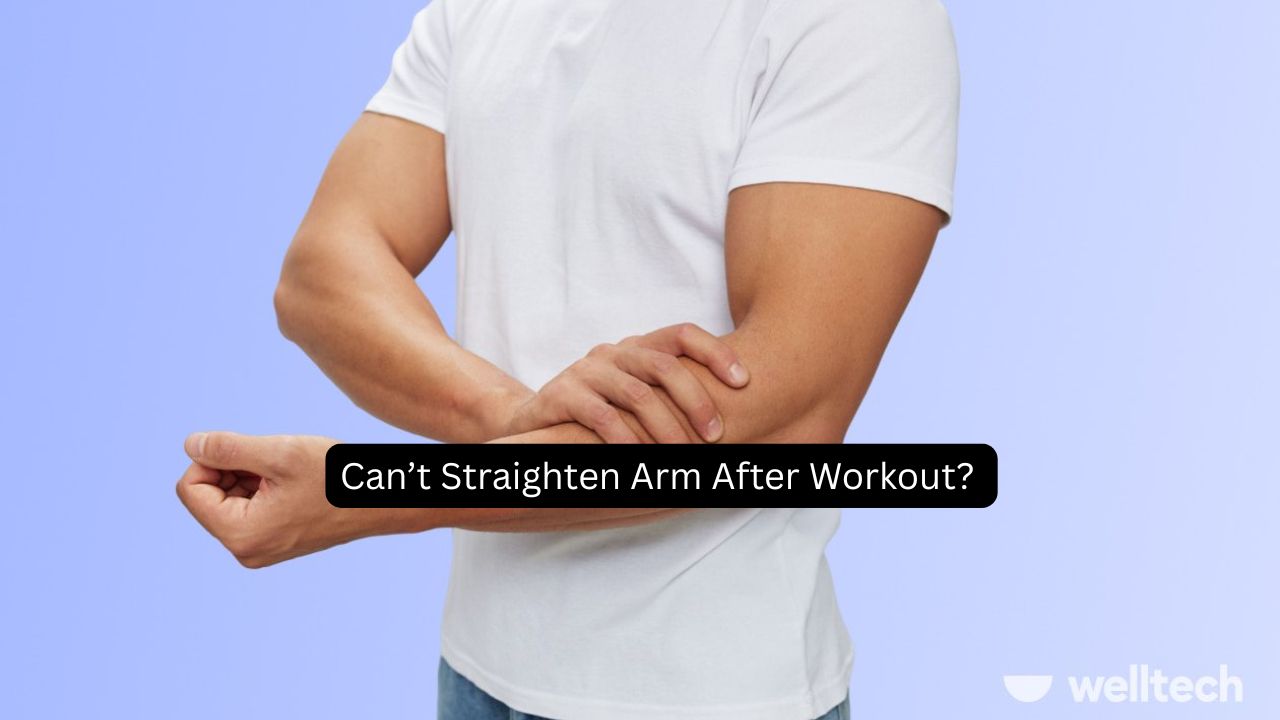
Ever finished a tough workout feeling proud, only to wake up the next morning unable to fully straighten your arm? It feels tight, sore, and almost locked in place—like your arm suddenly forgot how to function. Annoying, right?
You’re not alone. This is one of the most common post-workout complaints, especially after arm day or upper-body training. The good news? Most of the time, it’s completely normal and temporary.
Let’s break it down in simple terms and get your arm moving freely again.
What Does It Mean When You Can’t Straighten Your Arm?
Not being able to straighten your arm after a workout usually means your muscles are inflamed, tight, or slightly damaged from training stress.
But here’s the key question:
Is it normal soreness—or something more serious?
Temporary stiffness
This is the most common scenario. Your muscles are tight because they’re repairing microscopic damage caused by exercise.
Warning signs to watch for
If pain is sharp, swelling is severe, or movement feels unstable, it may indicate an injury rather than normal soreness.
Main Reasons You Can’t Straighten Your Arm After Workout
Delayed Onset Muscle Soreness (DOMS)
DOMS is the #1 reason. It usually kicks in 12–48 hours after exercise and peaks around day two.
Think of it like a mini construction site inside your muscle fibers. They’re rebuilding—so stiffness is part of the process.
Muscle micro-tears
Strength training causes tiny tears in muscle fibers. These tears lead to inflammation, making it painful to extend your arm fully.
Overtraining or sudden intensity increase
Did you lift heavier than usual or try new exercises? Your muscles might be protesting the sudden shock.
Improper exercise form
Bad form puts extra stress on muscles and tendons, especially around the elbow joint.
Lack of warm-up and cool-down
Skipping warm-ups is like driving a car in winter without warming the engine—something’s bound to strain.
Dehydration and electrolyte imbalance
Muscles need fluids and minerals to function properly. Without them, stiffness increases.
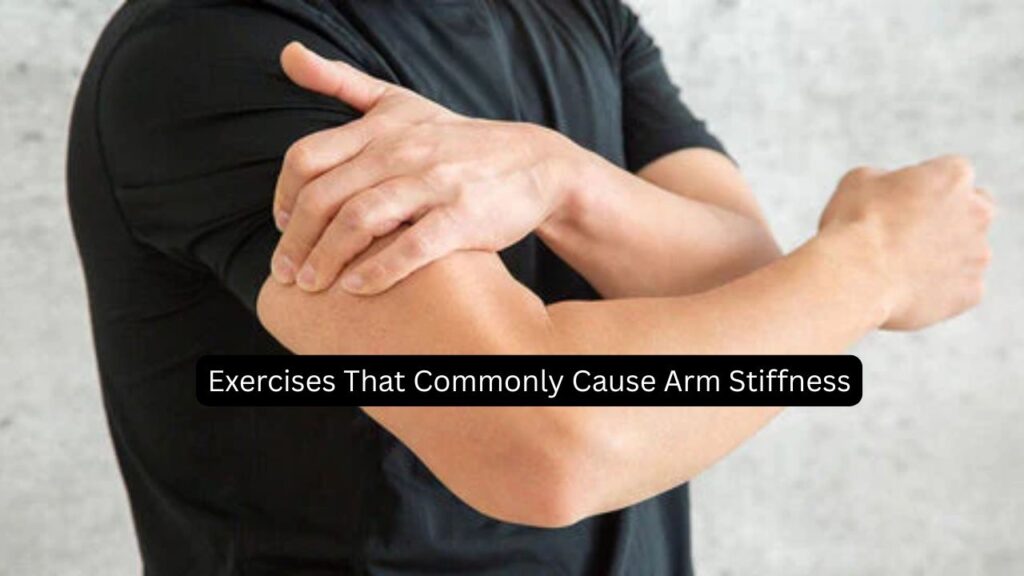
Exercises That Commonly Cause Arm Stiffness
Biceps-focused workouts
- Bicep curls
- Hammer curls
- Chin-ups
Triceps-heavy exercises
- Tricep dips
- Skull crushers
- Close-grip bench press
Compound upper-body movements
- Pull-ups
- Rows
- Bench press
Bodyweight exercises
- Push-ups
- Planks
These movements heavily involve elbow flexion and extension, which explains the stiffness.
Is It Dangerous If I Can’t Straighten My Arm?
When it’s normal
- Mild to moderate soreness
- Tightness that improves with movement
- No sharp pain
When it’s not
Signs of muscle strain
- Sudden pain during a workout
- Bruising
- Weakness
Symptoms of tendon or joint injury
- Pain near elbow joint
- Swelling that doesn’t reduce
- Clicking or locking sensation
If these show up, don’t ignore them.
How Long Does Arm Stiffness Last After Workout?
Typical recovery timeline
- 1–3 days: Normal DOMS
- 4–7 days: Heavy training or beginner soreness
Factors that affect healing speed
- Age
- Training experience
- Sleep quality
- Nutrition
Recovery is personal—no two bodies heal the same way.
Immediate Relief Tips for Arm Stiffness
Rest and active recovery
Light movement increases blood flow and reduces stiffness faster than complete rest.
Ice vs heat therapy
- Ice: First 24 hours for inflammation
- Heat: After stiffness sets in
Gentle stretching
Never force the arm straight. Ease into it.
Massage and foam rolling
Think of it as ironing out muscle knots.
Best Stretches to Straighten Your Arm Safely
Biceps stretch
Extend your arm behind you with palm facing down. Hold for 20–30 seconds.
Triceps stretch
Raise your arm overhead and gently press the elbow back.
Elbow mobility exercises
Slow flex-and-extend movements improve joint lubrication.
Nutrition and Hydration for Faster Recovery
Importance of protein
Protein repairs muscle tissue. Aim for quality sources like eggs, chicken, lentils, or whey.
Anti-inflammatory foods
- Turmeric
- Ginger
- Berries
- Omega-3 fats
Water and electrolytes
Hydration keeps muscles elastic and reduces stiffness.
Can You Still Work Out With a Stiff Arm?
When light movement is okay
Cardio or lower-body training is usually safe.
When to take a full break
If pain worsens or limits range of motion, rest is non-negotiable.
Common Mistakes That Make Arm Stiffness Worse
Ignoring pain
Pain is feedback, not background noise.
Training through soreness
More isn’t always better—sometimes it’s just more damage.
Skipping recovery days
Muscles grow during rest, not workouts.
How to Prevent Arm Stiffness After Workouts
Proper warm-up routine
5–10 minutes of dynamic movement prepares muscles.
Progressive overload
Increase weights gradually—your muscles need time to adapt.
Correct exercise technique
Form first, ego last.
Importance of recovery
Sleep, hydration, and rest days are non-negotiable.
When to See a Doctor or Physiotherapist
Red flags
- Pain lasting over 7 days
- Severe swelling
- Limited joint movement
Medical conditions to rule out
- Tendinitis
- Bursitis
- Muscle tears
Myths About Post-Workout Arm Pain
“No pain, no gain”
False. Smart training beats painful training.
Stretching fixes everything
Stretching helps—but recovery is a full-system effort.
Read also:-
- Are Cotton T-Shirts Good for Workout? The Complete Fitness Wear Guide
- Can You Take Pre Workout While Pregnant? A Complete Safety Guide
Final Thoughts on Arm Stiffness After Workout
Not being able to straighten your arm after a workout can feel alarming, but most of the time it’s just your body adapting and getting stronger. Treat it right—rest, nourish, stretch, and train smart.
Remember: consistency beats intensity.
FAQs:-
1. Is it normal to not straighten your arm after workout?
Yes, especially due to DOMS. It usually resolves in a few days.
2. Should I stretch if my arm hurts?
Gentle stretching is fine, but avoid forcing movements.
3. Can DOMS cause severe stiffness?
Absolutely, especially after new or intense workouts.
4. How can I recover faster from arm soreness?
Sleep well, hydrate, eat protein, and stay active lightly.
5. When should I worry about arm pain after exercise?
If pain is sharp, persistent, or worsening after a week, seek professional advice.

dilaawarrajput@gmail.com
Fitness writer sharing practical, evidence-aware guidance for stronger everyday living.